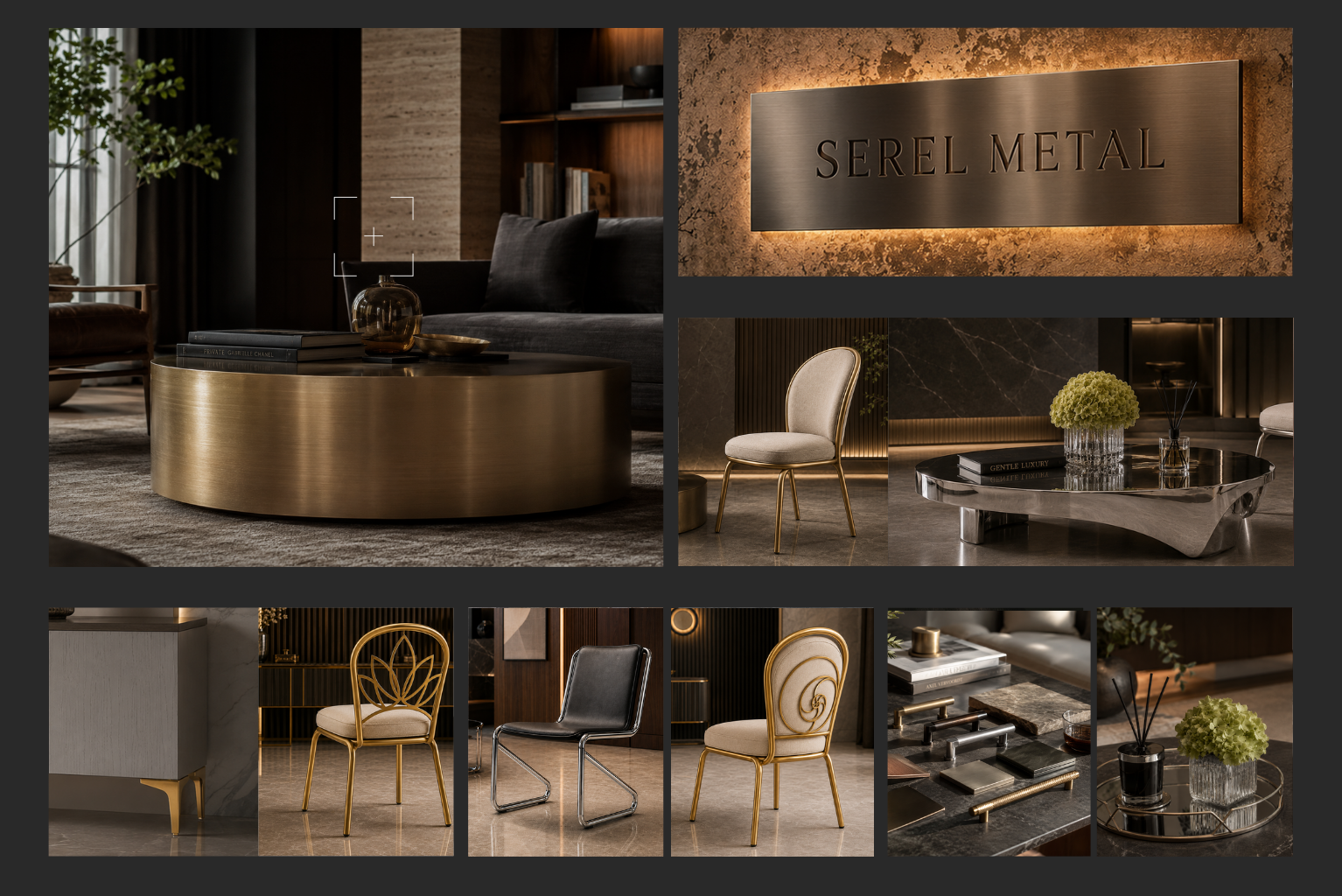
Metal finishes are no longer considered secondary design details. In 2026, decorative metal surfaces have become central elements in defining the atmosphere, character, and perceived quality of modern interiors.
From warm brushed bronzes to soft satin nickel textures, today’s architectural and furniture-focused metal finishes are moving toward a more tactile, timeless, and emotionally refined direction. Designers are increasingly choosing surfaces that not only look luxurious, but also age beautifully and integrate naturally with wood, stone, glass, and textured materials.
For furniture manufacturers, architects, interior designers, and premium hardware producers, 2026 marks a shift toward finishes that combine aesthetics, durability, and authenticity in a more balanced way.
1. Warm Metallic Finishes Continue to Dominate
One of the strongest decorative metal trends of 2026 is the continued rise of warm-toned finishes. Champagne gold, brushed bronze, antique brass, and soft copper tones are increasingly preferred over colder, industrial-looking surfaces. These finishes introduce warmth without overwhelming the space, making them ideal for luxury interiors, furniture hardware, decorative metal components, and architectural details.
Unlike highly reflective yellow gold finishes from previous years, modern warm metals feel softer, more restrained, and more sophisticated.
Popular Applications:
- • Furniture legs & frames
- • Cabinet hardware
- • Architectural trim elements
- • Luxury lighting details
- • High-end seating structures
- • Boutique hospitality interiors
Warm finishes work especially well alongside natural materials such as walnut, oak, marble, travertine, and textured fabrics.
2. Brushed & Satin Surfaces Replace High Gloss
While mirror-polished chrome still maintains its place in certain luxury applications, 2026 interiors increasingly favour surfaces with texture and softness. Brushed brass, satin nickel, matte bronze, and soft black chrome finishes are becoming preferred alternatives because they create a more natural visual depth while reducing excessive reflections.
This movement reflects a broader shift in interior architecture: spaces are becoming calmer, more tactile, and less visually aggressive. Brushed finishes also provide practical advantages:
- Fingerprints: Surfaces are less prone to visible marks.
- Maintenance: Micro scratches become less noticeable over time.
- Atmosphere: Lighting reflections appear softer and more architectural.
3. Patina & “Living Metal” Finishes Are Rising
Another defining trend of 2026 is the growing appreciation for metals that evolve naturally over time. Unlacquered brass, aged bronze, oxidized copper, and patinated surfaces are increasingly valued because they create uniqueness and character impossible to replicate artificially.
Rather than seeking perfectly uniform surfaces, many luxury projects now intentionally embrace subtle tonal variation, depth, and natural aging. These “living finishes” tell a story through authenticity.
4. Mixed Metal Combinations Create Layered Luxury
The era of perfectly matching every metal finish within a space is fading. In 2026, designers are confidently combining multiple finishes—such as brushed brass + matte black or satin nickel + bronze—to create richer and more curated interiors.
The key is controlled contrast rather than visual chaos. Typically, one dominant finish establishes the visual foundation, while secondary metals act as supporting accents throughout lighting, hardware, or decorative architectural elements.
5. Sustainable & Long-Lasting Finishing Technologies
Sustainability has become a core design expectation. Architects and manufacturers increasingly prioritize durable surface technologies and recyclable materials. Advanced PVD coatings, modern electroplating systems, and controlled surface treatments are gaining importance because they provide:
- Improved Wear Resistance: Extending the product lifespan.
- Color Stability: Long-term aesthetic consistency.
- Environmental Responsibility: Finishing systems that meet modern green standards.
The Direction of Decorative Metal Finishing in 2026
The decorative metal industry is moving toward a more emotional, architectural, and material-focused design language. In 2026, the most successful finishes are not necessarily the brightest ones — they are the finishes that feel natural, refined, and enduring.
Elevate Your Next Project
Our engineering team specializes in the latest decorative finish trends and durable OEM solutions for global brands.