Quality in electroplating is never accidental
A decorative finish on a furniture leg looks simple. Behind it sits a chain of controlled variables, from the condition of the steel to the curing of the last lacquer film. This is how we keep that chain under control in our İnegöl plant.
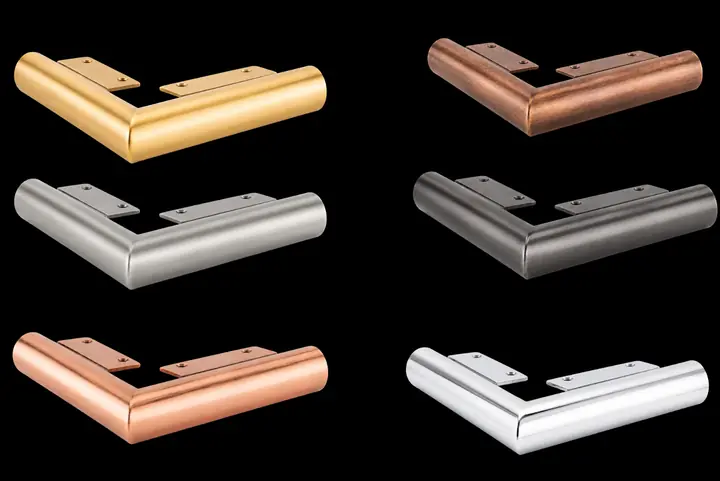
Why decorative plating is a surface-engineering process
Decorative electroplating is more than adding colour or shine to metal. A premium chrome, nickel or gold-tone finish comes from controlling many linked variables: substrate condition, polishing, cleaning, activation, electrolyte chemistry, electrical parameters, filtration, rinsing and, where used, lacquer curing.
That is why we treat finishing as one integrated process rather than a final step. Looking good on the day is not enough. The question that matters is why a surface came out the way it did, and how to repeat that result across thousands of parts in serial production.
Quality plating starts before the plating bath
Strong adhesion depends first on surface preparation. Depending on the base metal and the type of soil, a professional pretreatment line can include mechanical preparation, soak degreasing, ultrasonic cleaning, alkaline cleaning, electrocleaning, rinsing and acid activation. ASTM B322 describes these cleaning routes for metals before electroplating.
A thin film of oil, polishing compound, oxide or dust can be enough to stop copper or nickel from bonding. Cleanliness should therefore be checked, not assumed. The water-break test is the quickest shop-floor check: a clean surface holds a continuous film of water, while a contaminated one makes the water bead up or break apart. Controlled transfer times between tanks and witness samples complete the picture.
Running matte and bright nickel baths under control
Nickel is the backbone of most decorative systems. Beyond appearance, it provides levelling, thickness and the base that chromium or lacquer will sit on. The variables that matter include pH, temperature, nickel concentration, chloride balance, boric acid, brightener, carrier, leveller and wetting agent, together with current density, plating time and anode-to-cathode geometry.
Additions should be driven by data: ampere-hour consumption, bath analysis, the supplier’s technical data sheet and process trends. Adding chemistry “by feel” makes results drift from batch to batch.
Filtration: an invisible system with visible results
A running pump does not prove that a bath is being filtered well. Real filtration performance is judged by actual flow rate, bath turnover, pressure difference across the filter, the micron rating of the media, the state of any bypass line, anode-bag integrity and sludge at the bottom of the tank.
On bright decorative work, a single suspended particle can be built into the deposit and grow into a visible nodule or rough spot.
Diagnosing pitting and pinholes correctly
Pitting, the small craters or pinholes sometimes seen in nickel, is one of the most common defects in decorative plating. A classic cause is hydrogen bubbles clinging to the part while it plates, which is why baths use a wetting agent.
Low wetting agent is not the only explanation, though. Air drawn in through a leaking pump suction, a filter that was not bled after maintenance, organic contamination, a poor racking angle that traps gas, weak cleaning or porosity in the base metal can all produce the same look. The right order is to confirm the mechanism first and correct the chemistry second.
Electrical quality is surface quality
Electroplating is a controlled direct-current process. What matters is not only the amperage on the rectifier display but how stable that current is and how it reaches each part. Current density (A/dm²), total current, voltage, ramp-up, DC ripple, busbar joints, rack contact resistance and anode-to-cathode distance should be read together.
Nickel build-up or high resistance at rack contacts leads to uneven thickness, burning on edges, unplated areas (skip plating) and local heating.
Adhesion in acid copper plating
Acid copper gives excellent levelling and a smooth base for bright decorative systems. It cannot, however, be plated directly onto steel or zinc die-castings: on these active metals it forms a loose immersion deposit with poor adhesion. A strike layer, typically cyanide copper or a nickel strike, has to come first.
New or changed process routes should be proven with witness samples, adhesion checks such as the bend, file or heat tests described in ASTM B571, and, where needed, a cross-section.
Gold-tone and smoked lacquers: final film quality
Our gold-tone and smoked finishes are high-quality decorative finishes, built with a protective lacquer system over the plated metal. They are not electrolytic gold plating; here “gold” describes the colour of the finish.
Orange peel, craters, pinholes, fish-eyes, haze, milkiness, tackiness and uneven gloss rarely come from the lacquer alone. Final-rinse quality, deionised-water conductivity, silicone or oil contamination, lacquer temperature and viscosity, filtration, oven airflow, solvent release and the curing profile have to be assessed as one system.
The oven setpoint is not the part temperature
The number on the oven controller is the air temperature, not necessarily the temperature of the metal. Correct curing depends on the real part-temperature-over-time profile: heating rate, time at temperature, uniformity across the oven, exhaust and recirculation airflow, fan performance and how densely the oven is loaded.
Measure, verify, standardise
Our approach to process control fits in three words. When a defect appears, we first identify its type, then map where and how often it occurs, review the process data, and separate chemical causes from equipment, racking, flow and preparation causes. After a correction, the result is confirmed on a first-off part or witness sample, and a solution that works becomes part of the written process standard.
The aim is not just to apply a decorative coating, but to combine appearance, repeatability and engineering discipline on the same surface.
Glossary
| Term | Meaning |
|---|---|
| Drag-out | Process solution carried out of a tank on parts and racks |
| Rack | Conductive fixture that holds the part and carries current |
| Ripple | Residual AC variation on the DC output of a rectifier |
| Brightener, carrier, leveller | Organic additives that control gloss, grain and levelling in nickel |
| Wetting agent | Additive that lowers surface tension so hydrogen bubbles release |
| Strike | Thin first deposit that secures adhesion before the main layer |
| First-off | First part approved before a series is released |
Frequently asked questions
What causes pitting in nickel plating?
Usually hydrogen or air bubbles held on the part while it plates. Typical sources are low wetting agent, air drawn in by the filter pump, organic contamination, a racking angle that traps gas, poor cleaning or porous base metal.
Can acid copper be plated directly on steel?
No. On steel and zinc die-castings acid copper forms a non-adherent immersion deposit. A cyanide copper or nickel strike is applied first.
How do you check if a part is clean enough to plate?
The water-break test is the fastest check: a clean surface holds an unbroken film of water. Witness samples and adhesion tests confirm the result for new process routes.
Sources and standards
- ASTM B322, Standard Guide for Cleaning Metals Prior to Electroplating
- Pavco, How to perform a proper water-break test
- Superb Heating, Common problems in nickel electroplating
- Products Finishing, Choosing and troubleshooting copper electroplating processes
- ASTM B571, Qualitative Adhesion Testing of Metallic Coatings
Need plated furniture components?
Chrome, nickel, gold, rose, smoked, copper and antique finishes on legs, bases and fittings, produced in our İnegöl plant. Send a drawing and we reply within one business day.