What is chrome plating, how is it done and what drives the price?
Chrome is the finish most people picture when they think of a polished metal chair or table base. Here is what actually sits on the surface, how the layers are built in a plating line, and why two quotes for “chrome plating” can differ so much.
What chrome plating is
Chrome plating is an electroplating process in which a thin layer of chromium is deposited on a metal part using direct current in a chemical bath. In furniture and hardware, the type used is decorative chrome: a bright, hard, slightly bluish surface that resists tarnish and is easy to clean.
The chromium layer itself is extremely thin, usually between 0.13 and 0.25 micrometres. On its own it would not hide scratches or protect steel for long. The real work is done by the layers beneath it.
The layers behind a chrome finish
A decorative chrome system on steel is normally built in three stages. Copper levels the surface and helps adhesion. Bright nickel, the thickest layer, gives the mirror look and most of the corrosion protection. Chromium goes on last as a thin, hard, tarnish-resistant skin. ISO 1456 sets out how these copper-nickel-chromium systems are specified for different service conditions.
This is why “chrome” parts can look very different after a few years: the quality of the nickel and copper underneath matters more than the chromium on top.
How chrome plating is done, step by step
Before any metal is deposited, the part is polished if needed, degreased, cleaned, rinsed and activated so the surface is chemically clean. It is then hung on a conductive rack and moved through the plating tanks, with rinses in between: a strike layer where the base metal requires it, copper, nickel and finally chromium.
Current density, bath temperature, chemistry and time in each tank decide the thickness and appearance of every layer. After the final rinse and drying, parts are inspected and packed.
Which parts can be chrome plated?
Steel, stainless steel, brass, copper, zinc die-castings (zamak) and aluminium can all be chrome plated, but each needs its own preparation route. The material choice therefore affects both the process and the cost. We explain the differences in our guide to which metals can be plated. At Serel Metal, we plate steel components.
What sets the price of chrome plating?
There is no single price per kilo that fits every part. A quote depends on several factors working together:
Size and geometry: large or deeply shaped parts take more rack space and are harder to plate evenly. Base metal: zamak and aluminium need extra steps compared with steel. Surface condition: welds, scratches and rough edges must be polished before plating, and polishing is often the biggest cost. Layer system and thickness: a heavier nickel layer costs more but lasts longer. Quantity and repeatability: series production on the same rack is far more efficient than small mixed batches.
Chrome, nickel or a coloured finish?
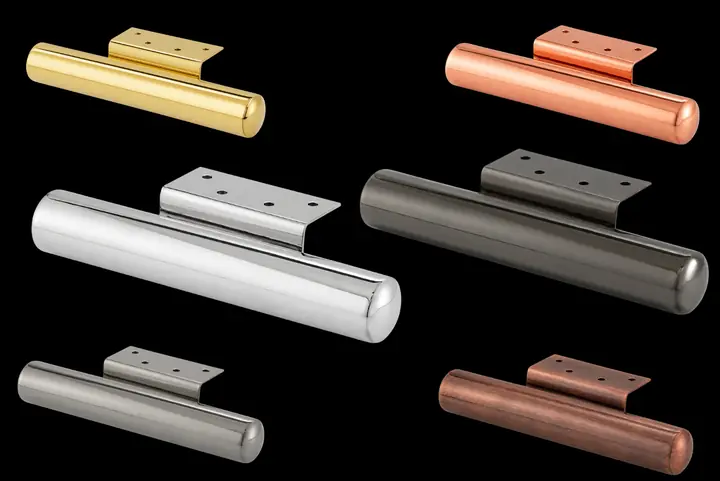
Chrome is not the only option. Bright nickel gives a warmer tone, while gold-tone, smoked and antique finishes are built on the same plated base and finished with a protective decorative lacquer. For outdoor or heavy-use furniture, powder coating can also be the better choice.
Chrome plating in İnegöl, Bursa
İnegöl is one of Turkey’s largest furniture production centres, and having plating close to the frame and leg manufacturers shortens lead times and transport. Serel Metal is the plating arm of Erhun Metal, which has produced furniture mechanisms and components in İnegöl since 2006. Parts can be cut, formed, welded and plated in the same organised industrial zone, then shipped together.
Glossary
| Term | Meaning |
|---|---|
| Decorative chrome | Thin, bright chromium top layer over nickel |
| Bright nickel | Main layer that gives shine and most corrosion protection |
| Strike | Thin first layer that secures adhesion on difficult metals |
| Rack | Conductive fixture that holds parts in the bath |
| Current density | Current per unit area, in A/dm² |
Frequently asked questions
How thick is chrome plating?
The decorative chromium layer is usually 0.13 to 0.25 micrometres thick. Most of the total coating thickness is the copper and nickel underneath.
How much does chrome plating cost?
It depends on part size and shape, base metal, how much polishing is needed, the layer thickness and the quantity. Send a drawing or photo with quantities for an accurate quote.
Is chrome plating the same as chrome paint or spray?
No. Chrome plating is an electrochemical metal deposit. Chrome-effect paints and sprays only imitate the look and are far less durable.
Sources and standards
Need plated furniture components?
Chrome, nickel, gold, rose, smoked, copper and antique finishes on legs, bases and fittings, produced in our İnegöl plant. Send a drawing and we reply within one business day.