Powder coating or electroplating: which finish suits your furniture metal?
Both finishes protect steel and both look good when done well, but they solve different problems. Choosing the right one for each part saves cost and avoids disappointment once the furniture is in use.
Two different technologies
Electroplating deposits a thin layer of metal, such as copper, nickel or chromium, on the part in a chemical bath using electric current. Electrostatic powder coating sprays charged polymer powder onto the part, which is then cured in an oven to form a continuous plastic film.
Appearance
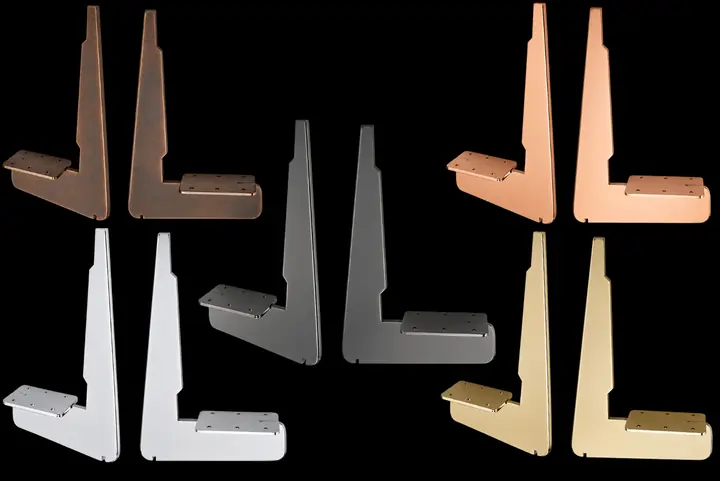
Plating produces a genuine metallic surface: mirror chrome, warm nickel, or gold-tone, smoked and antique finishes built on a plated base. Powder coating offers a much wider palette of colours and textures, from matte black and RAL colours to metallic effects, but it is a paint film and looks like one up close.
Thickness and fit
Plated layers are very thin, so threads, holes and tight fits are barely affected. Powder coating forms a thicker film, which protects well but can affect tolerances on assemblies, mechanisms and threaded parts unless they are masked.
Durability in use
Powder coating resists impact, chemicals and UV well, which suits outdoor furniture and parts that are handled roughly. A good plating system is hard and resists wear and tarnish, and keeps its shine for years indoors. Each has weak points: deep scratches on plating can expose the steel, while chips in powder coating can let corrosion creep under the film.
Cost and lead time
Cost depends on the part, but as a general pattern powder coating is economical for large volumes of simple shapes in standard colours. Plating usually needs more preparation, especially polishing, and is chosen where the metallic appearance justifies it.
How to choose, part by part
Visible decorative parts such as legs, bases, handles and trims often suit plating. Hidden or structural parts such as bed base frames, mechanism arms and brackets often suit powder coating. Many furniture projects use both: plated legs on the outside, powder-coated mechanisms inside.
Both finishes under one roof in İnegöl
Erhun Metal, which manufactures furniture mechanisms, bed base lifts and fittings in İnegöl since 2006, runs its own electrostatic powder coating. Serel Metal, its plating arm, handles chrome, nickel and decorative plated finishes in the same organised industrial zone. One project can be produced, finished and shipped together, with one point of contact.
Glossary
| Term | Meaning |
|---|---|
| Electroplating | Metal deposited in a bath using electric current |
| Electrostatic powder coating | Charged powder sprayed and oven-cured into a film |
| Curing | Oven step that melts and hardens powder or lacquer |
| Masking | Covering areas that must stay uncoated |
| RAL | Standard colour system used for powder coatings |
Frequently asked questions
Is powder coating better than chrome plating?
Neither is better in every case. Powder coating suits colour, outdoor use and impact; plating suits a true metallic look and tight tolerances.
Can a part be both powder coated and plated?
Yes, on different areas or different parts of an assembly. Many furniture projects combine plated visible parts with powder-coated hidden parts.
Which finish is better for outdoor furniture?
Powder coating is usually the safer choice outdoors because of its thicker film and UV resistance, especially near the sea.
Sources and standards
Need plated furniture components?
Chrome, nickel, gold, rose, smoked, copper and antique finishes on legs, bases and fittings, produced in our İnegöl plant. Send a drawing and we reply within one business day.