Clear Lacquer Over Plating: Protecting Brass, Copper and Smoked Finishes
Copper, brass, antique and smoked finishes need a lacquer topcoat to last. How lacquer is applied and cured, and how to avoid clouding, orange peel and peeling.
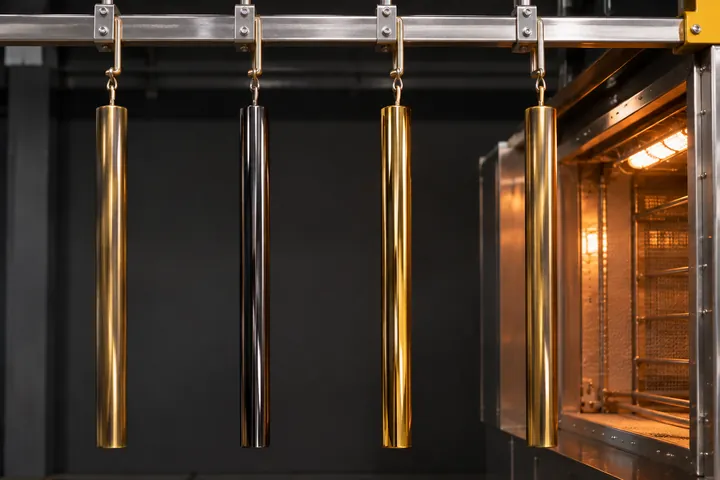
Chrome protects itself. Most other decorative metals do not. Bright copper darkens within weeks, brass tarnishes, antique finishes keep reacting with the air, and smoked or gold-smoke tones do not exist at all without their lacquer. For much of today's furniture palette, the transparent topcoat is not an accessory: it is the finish.
What lacquer does
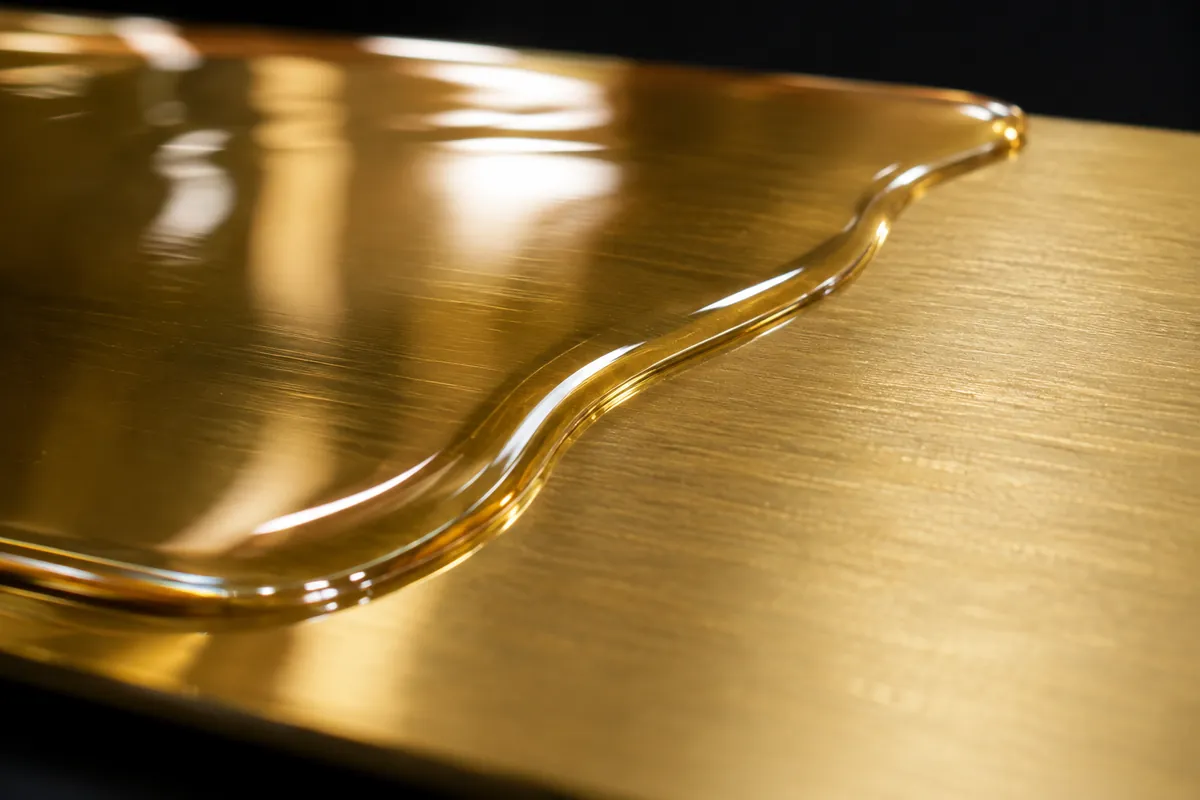
A good decorative lacquer seals the metal from oxygen, moisture and sweat; carries the colour of smoked and gold-smoke tones; adds resistance to fingerprints and light abrasion; and keeps the metallic depth of the plating visible underneath. It must do this at a film of a few microns, without runs or haze, and stay clear for years.
How it is applied
Plating shops use dip or flow coating for full coverage of tubes and complex shapes, spray for fine control on visible faces, and electrophoretic lacquering where current deposits a very even film on edges and recesses. Each method has its own viscosity, temperature and filtration window, and each is unforgiving if those drift.
The four rules that decide quality
- Arrive clean and dry. Drag-out salts or water spots on the plated part become white marks under the lacquer. A clean final rinse and thorough drying matter as much as the lacquer itself.
- Measure the bath. Viscosity (commonly checked with a Ford cup), solids, temperature and filtration should be logged, not guessed. Hot summer workshops are a classic cause of drift.
- Cure fully. Lacquer reaches final hardness and adhesion only after the specified time at the specified oven temperature, and some systems keep hardening for hours or days afterwards. Adhesion tests done too early mislead; parts packed too early stick or mark.
- Match lacquer to the surface. Antique finishes are porous and chemically active. Lacquer compatibility must be proven on that exact finish, not on bright nickel.
| Defect | Most likely cause | First check |
|---|---|---|
| Milkiness, clouding | Moisture trapped in the film; high humidity; water on the part | Drying before lacquer, room humidity, bath temperature |
| White spots or rings | Dried rinse water or salts under the film | Final rinse quality, drying air |
| Orange peel, poor flow | Viscosity too high, poor levelling, wrong temperature | Viscosity, solvent balance, bath and oven temperature |
| Tacky surface | Under-cure | Oven temperature and time |
| Peeling or scratching off | Contaminated surface, under-cure | Surface cleanliness, cure, adhesion test after full cure |
For buyers
Ask whether a finish relies on lacquer, how to clean it (mild soap and a soft cloth; never solvents or abrasive creams) and whether it is meant for indoor use only.
Serel Metal in İnegöl
In our İnegöl plant, Serel Metal combines plating with clear, gold and smoked lacquer finishing, with filtered lacquer baths and oven curing, so plated and lacquered furniture parts leave one facility ready for assembly. Our robotic and manual plating lines handle both large series and special small-batch work. Contact info@serelmetal.com or export@serelmetal.com.
Have metal furniture parts to finish?
Send your drawing or a sample and we will reply within one business day.